Korean Bibimbap
Highlighted under: Traditional Kitchen
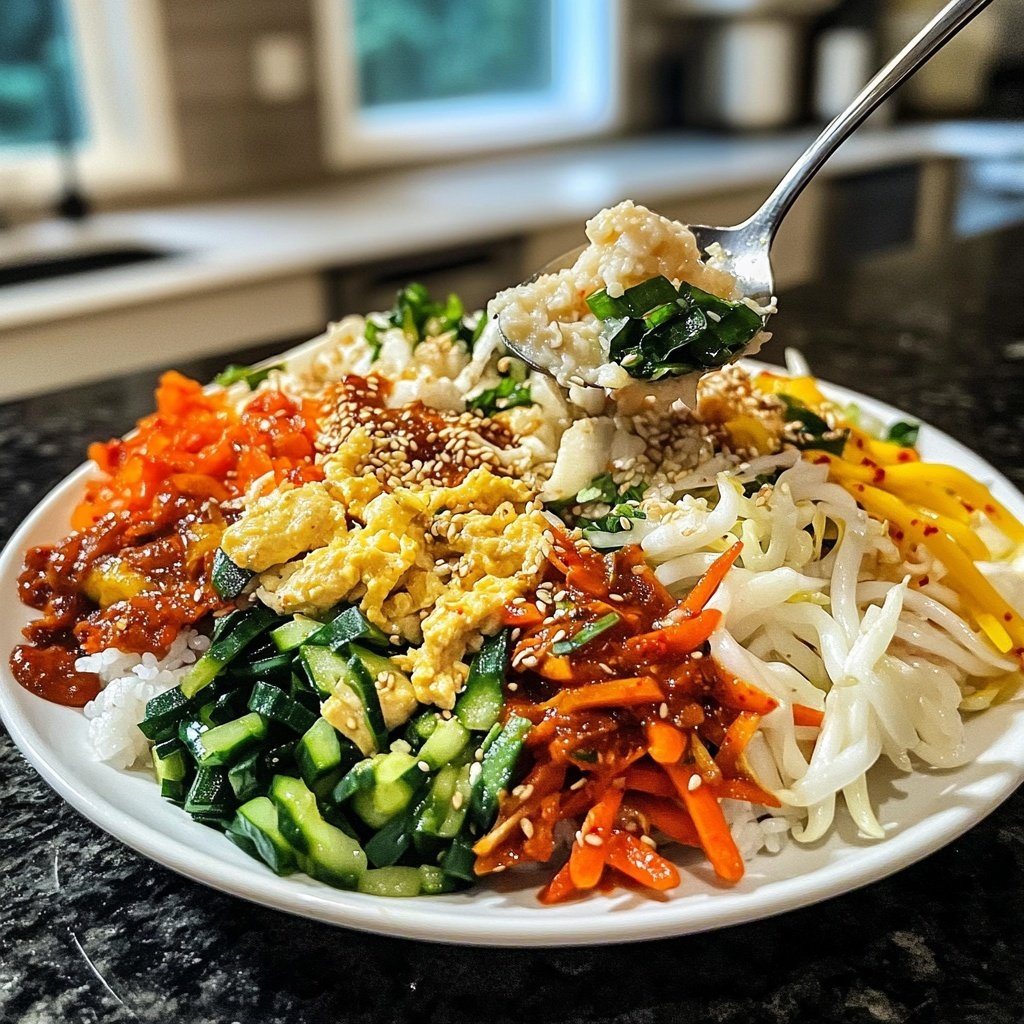
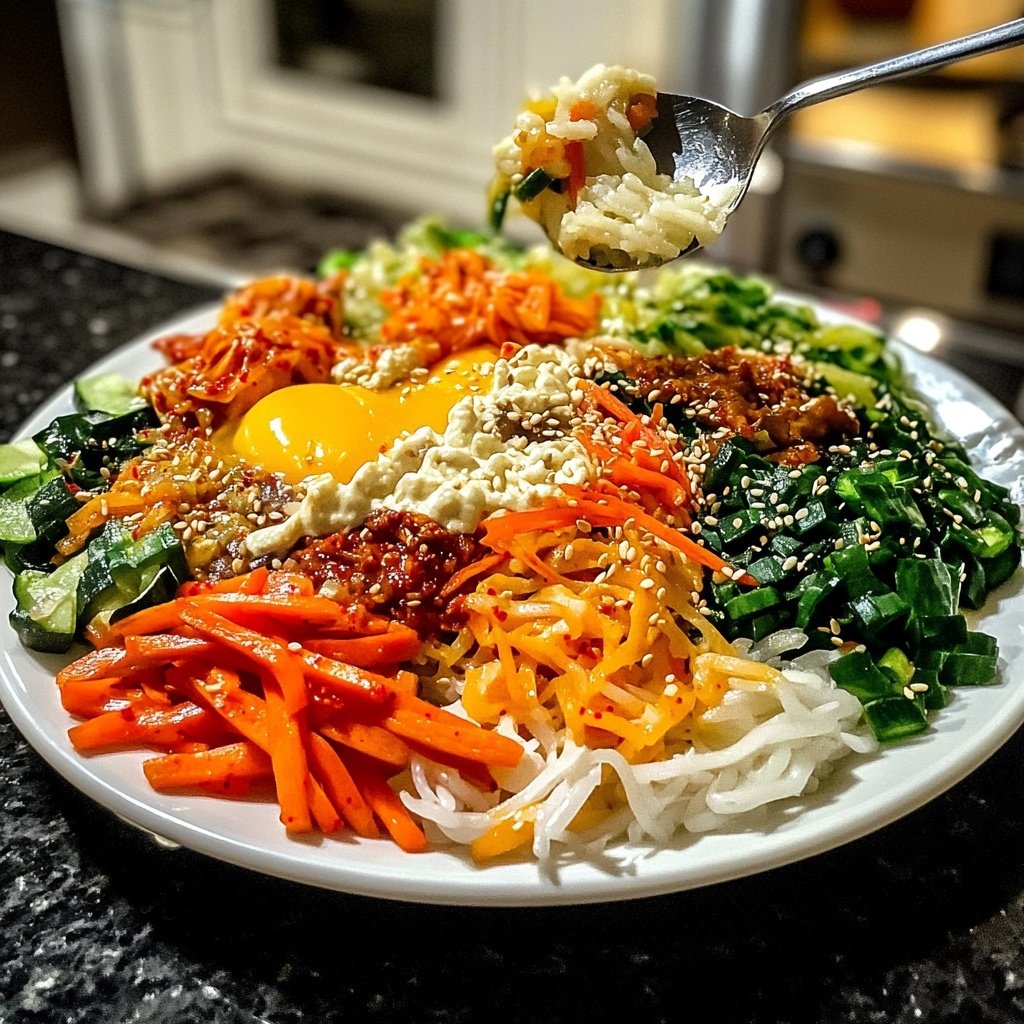
Korean Bibimbap is a vibrant and delicious rice dish topped with an assortment of vegetables, meat, and a fried egg, all mixed together with spicy gochujang sauce.
Discover the beauty of Korean cuisine with this colorful and nutritious Bibimbap. Each ingredient is carefully chosen to provide a balance of flavors and textures, making it a perfect meal for any occasion.
Why You Will Love This Recipe
- A delightful mix of textures and flavors
- Customizable with your favorite vegetables and proteins
- Healthy and satisfying, perfect for a balanced meal
Ingredients
For the Bibimbap
- 2 cups cooked short-grain rice
- 1 cup spinach, blanched and chopped
- 1 carrot, julienned
- 1 zucchini, julienned
- 1 cup bean sprouts, blanched
- 4 shiitake mushrooms, sliced
- 1 cup ground beef (or tofu for a vegetarian option)
- 4 eggs
- 2 tablespoons gochujang (Korean red chili paste)
- 1 tablespoon sesame oil
- 1 tablespoon vegetable oil
- Salt to taste
- Sesame seeds for garnish
Prepare all ingredients before you start cooking for a smoother process.
Instructions
Heat vegetable oil in a pan over medium heat. Sauté the carrots and zucchini until tender, about 3-4 minutes. Add the mushrooms and sauté for an additional 2 minutes. Season with salt and set aside.
In the same pan, add the ground beef and cook until browned. Season with salt and a splash of sesame oil. Remove from heat.
In a separate pan, fry the eggs sunny-side up, keeping the yolks runny for mixing later.
In individual bowls, place a serving of rice at the bottom. Arrange the sautéed vegetables, beef, and a fried egg on top. Drizzle with gochujang and sesame oil before serving.
Mix everything together in the bowl before eating to enjoy the full flavor of Bibimbap!
Serving Suggestions
Bibimbap is often served as a standalone meal, but you can elevate the experience by pairing it with traditional Korean side dishes known as banchan. Kimchi, pickled radishes, or stir-fried zucchini are great accompaniments that enhance the overall dining experience. Consider serving a refreshing cucumber salad on the side to balance the warmth and richness of the bibimbap.
For a complete meal, offer a light soup, such as miso or clear broth, to round out the flavors. This combination not only adds variety to your table but also pays homage to the communal dining style often seen in Korean culture.
Storage and Reheating
Bibimbap can be easily stored in the refrigerator for up to three days, making it a great option for meal prep. To store, separate the components into airtight containers to maintain freshness. Keep the gochujang and sesame oil separate until you're ready to serve to ensure the ingredients stay crisp and flavorful.
When reheating, it’s best to warm the rice and vegetables in a pan over low heat to prevent them from drying out. Add a splash of water or broth to create steam and retain moisture. For a delightful twist, consider reheating the dish in a hot stone bowl to recreate that signature crispy rice layer at the bottom.
Variations to Explore
While the traditional bibimbap is delicious, don’t hesitate to experiment with different ingredients. For a seafood twist, try adding shrimp or octopus. If you’re looking for a vegetarian option, consider incorporating marinated tofu, avocado slices, or even grilled eggplant to enhance the dish's flavor profile.
You can also play with the toppings by adding a sprinkle of crushed seaweed or a drizzle of sriracha for an extra kick. The beauty of bibimbap lies in its adaptability; let your creativity shine as you make it your own!
Questions About Recipes
→ Can I make Bibimbap vegetarian?
Yes, you can substitute the beef with tofu or additional vegetables.
→ What type of rice should I use?
Short-grain rice is traditional for Bibimbap, but you can use any rice you prefer.
→ Is Bibimbap healthy?
Yes, it is packed with vegetables, protein, and can be made with less oil for a healthier option.
→ Can I prepare the ingredients in advance?
Absolutely! You can prepare the vegetables and meat a day ahead and assemble them when you are ready to eat.
Korean Bibimbap
Created by: Leonie Fairchild
Recipe Type: Traditional Kitchen
Skill Level: Intermediate
Final Quantity: 4 servings
What You'll Need
For the Bibimbap
- 2 cups cooked short-grain rice
- 1 cup spinach, blanched and chopped
- 1 carrot, julienned
- 1 zucchini, julienned
- 1 cup bean sprouts, blanched
- 4 shiitake mushrooms, sliced
- 1 cup ground beef (or tofu for a vegetarian option)
- 4 eggs
- 2 tablespoons gochujang (Korean red chili paste)
- 1 tablespoon sesame oil
- 1 tablespoon vegetable oil
- Salt to taste
- Sesame seeds for garnish
How-To Steps
Heat vegetable oil in a pan over medium heat. Sauté the carrots and zucchini until tender, about 3-4 minutes. Add the mushrooms and sauté for an additional 2 minutes. Season with salt and set aside.
In the same pan, add the ground beef and cook until browned. Season with salt and a splash of sesame oil. Remove from heat.
In a separate pan, fry the eggs sunny-side up, keeping the yolks runny for mixing later.
In individual bowls, place a serving of rice at the bottom. Arrange the sautéed vegetables, beef, and a fried egg on top. Drizzle with gochujang and sesame oil before serving.
Nutritional Breakdown (Per Serving)
- Calories: 500 kcal
- Total Fat: 22g
- Saturated Fat: 6g
- Cholesterol: 186mg
- Sodium: 600mg
- Total Carbohydrates: 60g
- Dietary Fiber: 5g
- Sugars: 3g
- Protein: 23g